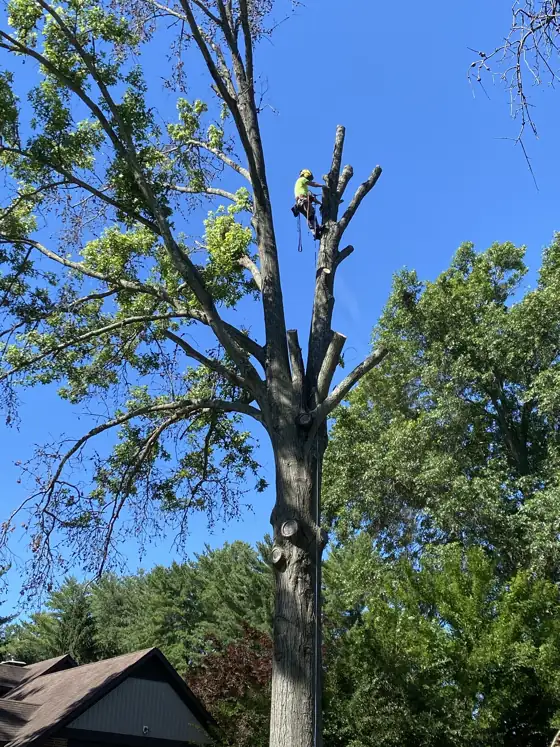
Pruning that keeps trees healthy, not just shorter
Good pruning is selective. We remove dead, broken and crossing limbs, open up dense crowns so wind can pass through, and create clearance over roofs, driveways and sidewalks. Every cut is made just outside the branch collar so the tree can seal the wound properly.
What we won't do is top your tree. Topping (cutting the whole crown back to stubs) leaves large wounds that decay and forces a flush of weakly attached sprouts that become hazards a few years later. If a tree is truly too big for its space, we will tell you honestly whether reduction pruning or removal is the better call.
Trimming services
- Deadwood removal. Dead limbs are the ones that fall on cars and people.
- Crown thinning. Selectively removing limbs to reduce weight and let light and wind through.
- Crown raising. Lifting low limbs for clearance over lawns, driveways, sidewalks and streets.
- Roof and gutter clearance. Pulling limbs back off shingles and out of gutters.
- Crown reduction. Shortening long, heavy limbs back to healthy lateral branches.
- Structural pruning for young trees. A few smart cuts now prevent weak forks later.
When to prune
Late fall through winter is the best time for most trees. Leaves are down, so the structure is easy to read, and pests and disease are less active.
Oak owners: avoid pruning or wounding oaks in spring and early summer. Fresh cuts during that window can attract the beetles that spread oak wilt, a fatal disease. Unless a limb is hazardous, we schedule oak pruning for the dormant season.
How much should come off?
Less than most people expect. Removing too much live canopy at once stresses the tree and triggers the same weak sprouting that topping does. On a healthy mature tree we generally stay well under a quarter of the live crown in one season.
Tree Trimming & Pruning FAQ
How often should trees be trimmed?
Mature shade trees usually benefit from pruning every three to five years. Young trees do better with lighter, more frequent structural pruning while they are establishing their shape.
Do you use climbing spikes when trimming?
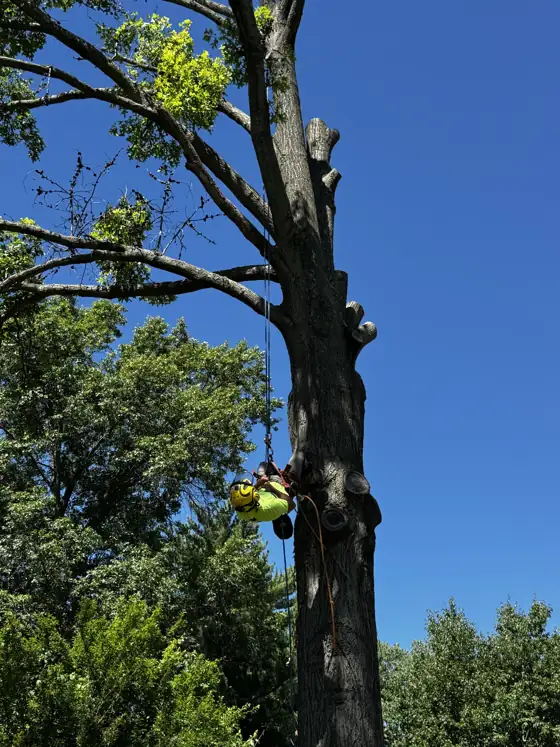
No. Spikes wound the trunk, so they belong on removals only. Trees that are staying get climbed with ropes and a harness.
Can you trim branches hanging over from my neighbor's yard?
In general, you can have limbs trimmed back to your property line as long as the tree itself isn't harmed. It is always a good idea to talk to your neighbor first. Check local rules if you are unsure.
Will trimming make my tree healthier?
Removing dead, diseased and rubbing limbs reduces entry points for decay and improves structure. Over-pruning does the opposite, which is why we prune selectively.